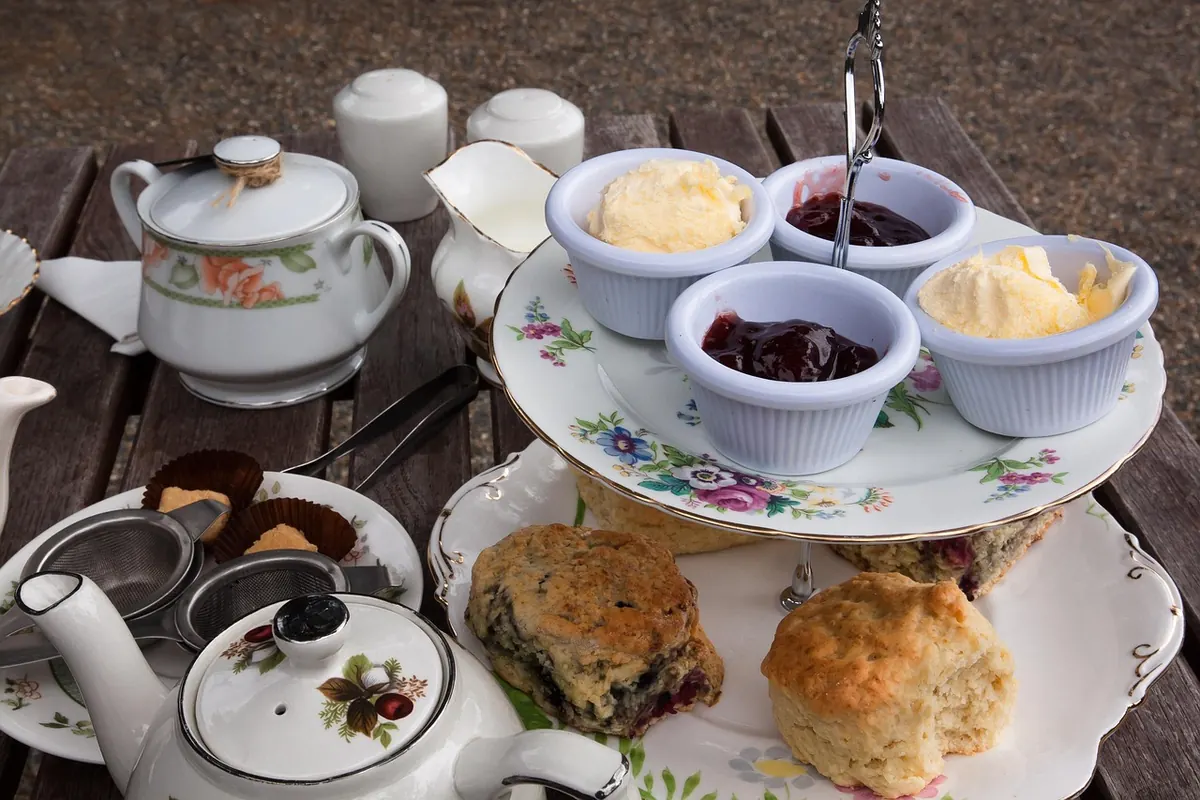
A proper afternoon tea is a small act of engineering. The scone is only the beginning — what you spread on it and what you pour alongside decide whether the plate sings or just sits there. Pairing is not a mystery. It follows a few sensible rules about fat, acidity, and aroma, and once you know them you can build a tea tray from whatever is already in the cupboard.
Most people choose a jam first and hope the scone cooperates. Reverse it. Taste the plain scone: a good one is buttery, faintly salty, and a little eggy if it came from a rich dough. That baseline tells you how much sweetness it can carry. A plain buttermilk scone will take a heavy, sweet spread without complaint. A scone already studded with raisins, candied peel, or chocolate will fight anything sugary on top — it wants tartness, or a bare scrape of butter and nothing else.
Savoury scones work on the same logic in reverse. A cheese and chive scone wants chutney, mustard butter, or something sharp. Strawberry jam on a cheddar scone is not adventurous; it is just confusing.
The rule underneath all of this: the more flavour already baked in, the simpler the topping should be.
Clotted cream is the traditional partner, and its job is texture as much as flavour. It is rich, faintly nutty, and thick enough to sit on a scone without soaking in. If you cannot find it, double cream whipped to soft, spoonable peaks is the closest everyday substitute. Mascarpone loosened with a spoonful of cream works too, though it reads sweeter. Crème fraîche brings a welcome tang to fruit and savoury scones alike, but it will not hold a mound — spread it thin.
Jam should be a contrast, not a second dessert.
Two habits matter more than the fruit itself. Use less jam than you think you need. And if your jam is loose, drain it briefly in a sieve — a soggy scone is a lost scone.
The tea should either echo the scone or clean up after it. Strong, malty teas handle rich cream and buttery dough. Lighter teas suit delicate fruit and floral notes.
Assam or English breakfast, brewed strong, with a splash of milk. Ceylon works when you want something crisper. For a lighter plate, try a second-flush Darjeeling.
Ceylon, Keemun, or a lightly smoky lapsang if you enjoy contrast. Earl Grey is fine with berry jam, but its bergamot will flatten delicate apricot.
Assam, or a roasted oolong — something with body. A delicate green tea disappears next to cocoa.
A brisk black tea such as Ceylon or Irish breakfast, or a toasted genmaicha. Avoid anything floral here.
First-flush Darjeeling, jasmine green, or a white peony if the scones are bite-sized and the spreads are light.
Brewing matters as much as the leaf. Black tea wants water just off the boil; green and white teas want it noticeably cooler, or they turn bitter. Give green tea two to three minutes and black tea three to four, and taste before you pour for guests.
If everything tastes sweet and muddy, the jam is too heavy or the cream is too cold. If the tea vanishes behind the food, it is too light or underleafed — add more leaf rather than steeping longer, which only brings out bitterness. If the scone itself tastes dry and dull, the spread was never the problem; it was overbaked or short on butter.
When bergamot fights your jam, switch to Ceylon. When lemon curd overwhelms a delicate tea, switch to a plain scone and let the curd lead. And when in doubt, simplify: plain scone, good butter, decent jam, a clean black tea. That combination has never needed rescuing.
Serve scones warm but not hot — real heat makes cream slide off. Split them with your hands or a fork rather than a knife, which compresses the crumb. Set jam and cream out at room temperature with their own spoons, and pour tea into a pot rather than into cups so guests can serve themselves at their own pace. Baking ahead is easy: freeze the scones just after shaping or once baked, then reheat them in a moderate oven for a few minutes until they smell like butter again. Assemble nothing until the pot is on the table.
Photo: stux / Pixabay
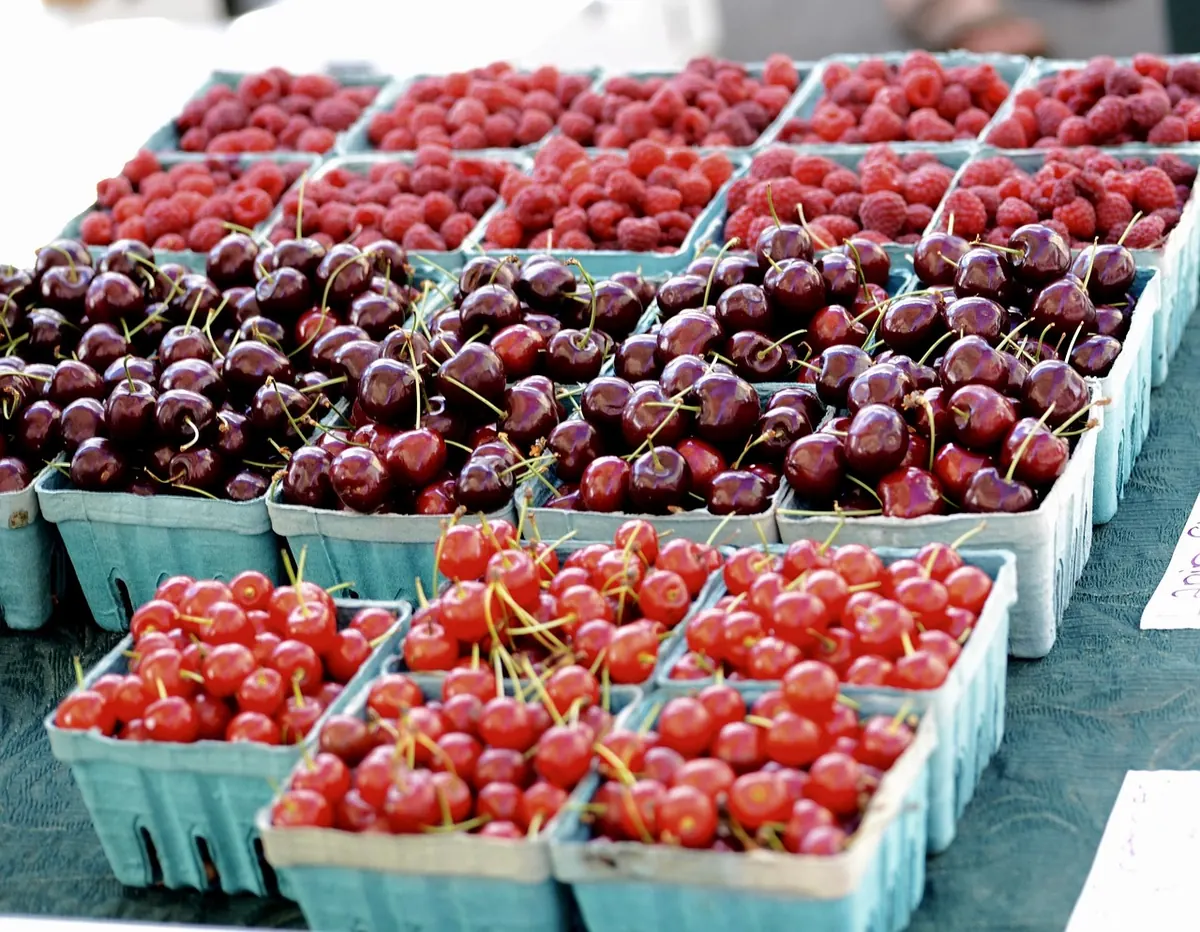
Adapt any scone recipe to seasonal fruit and herbs by adjusting liquid, sugar, and technique — with pairing ideas, a...

A savory scone formula built on sharp cheddar, chives, and black pepper, plus a mix-in ratio for building your own...

Freeze shaped scone dough and bake it straight from the freezer for a taller, flakier rise. Here is how to wrap,...
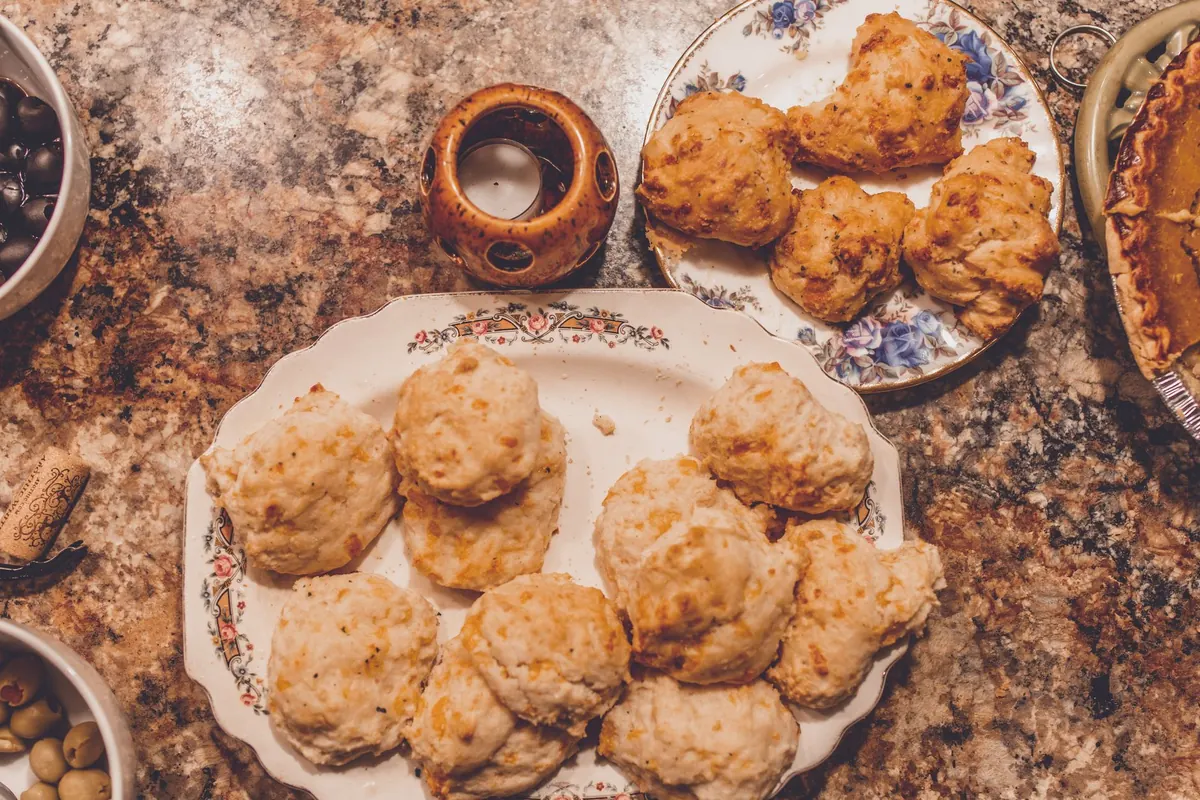

Cozy scones and quiet moments..
