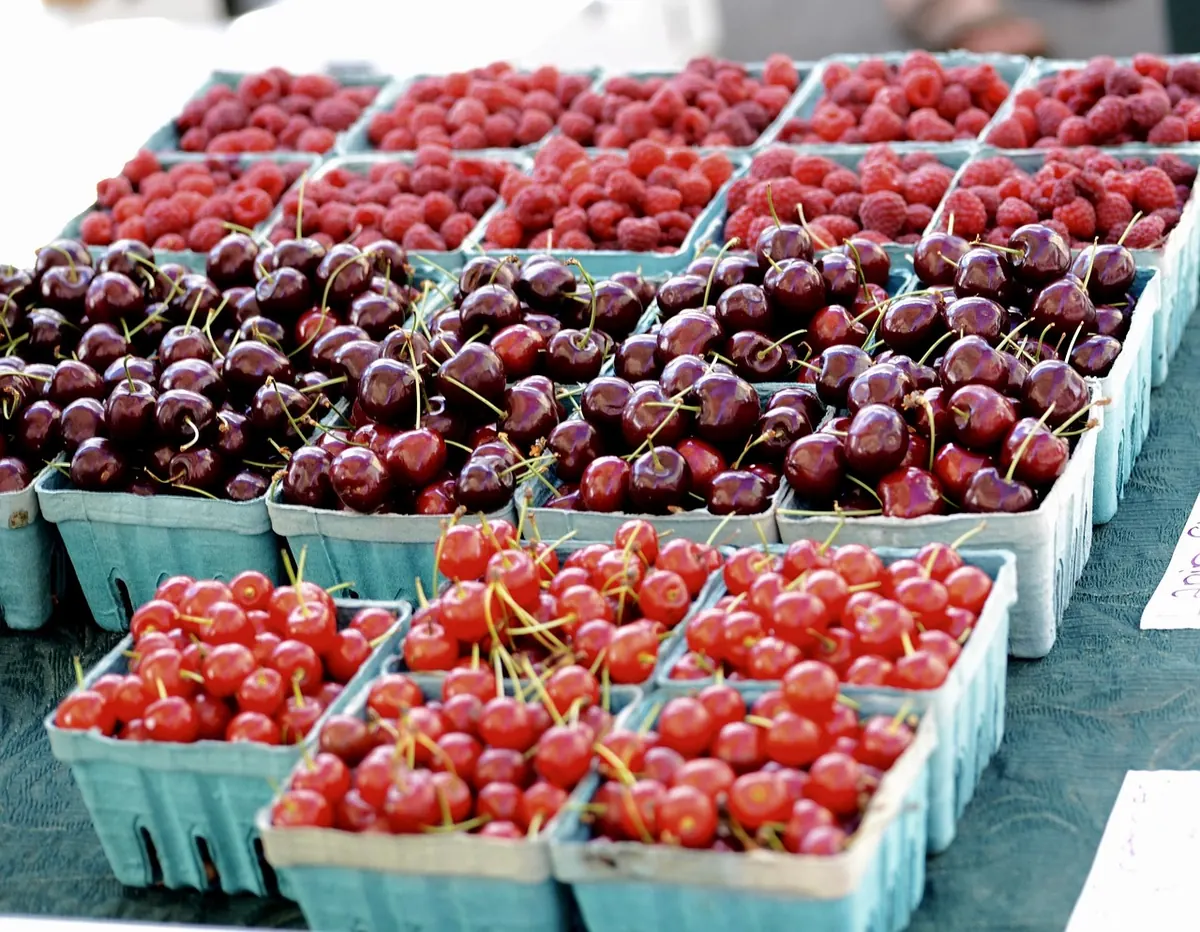
The stand at the far end of the market has white peaches this week and nothing else, and your scone recipe calls for blueberries. Do you walk away, or buy three pounds and hope? Buy them. Then read the dough instead of the recipe.
Scones are forgiving in a way that laminated pastry is not. They don't demand cold marble or perfect folds. What they do demand is a feel for moisture, because fruit and herbs change the water content of a dough far more than they change its flavor. Learn to manage that, and any recipe becomes a template for whatever the market is selling.
Before you swap in anything, know the skeleton you're working from. A reliable all-purpose scone dough runs roughly:
That yields eight generous wedges. Nearly every adaptation you make — more fruit, an herb, a handful of cheese — is a small edit to the sugar and the liquid, not a rewrite of the formula. Weighing your flour helps, since a cup scooped straight from the bag can run noticeably heavier than a cup spooned and leveled.
Berries, stone fruit, and pears release juice in the oven, and that juice has nowhere to go but sideways. A dough that looked perfect on the counter can bake into flat, damp slabs. The fix isn't to skip the fruit — it's to plan for the water.
Toss 1 to 1 1/2 cups of chopped fruit with a tablespoon of flour. Freeze it for 20 minutes if you have time; frozen fruit holds its shape when you fold it in and bleeds less. Then pull 2 to 4 tablespoons of liquid out of the recipe. With berries you're usually cutting cream or buttermilk, not the egg.
These hold their shape but can stay crunchy in a quick bake. Dice them small, or sauté in a little butter for five minutes to soften and concentrate them. Rhubarb and tart apples often want a touch more sugar, so taste a piece and let your tongue decide.
Dried cherries, apricots, and figs drink up moisture, so plump them in warm liquid first and use less added liquid in the dough. Purées are the opposite problem: pumpkin, apple butter, and mashed banana are wet. Cut the cream by a quarter cup and expect a softer, cakier crumb.
A tablespoon of finely chopped rosemary is plenty for two cups of flour. Two tablespoons of soft herbs like basil, mint, or dill will read clearly without turning the scone into a salad. Woody herbs — rosemary, thyme, sage — should be minced almost to dust, because a pine-needle-sized piece of rosemary is genuinely unpleasant to bite. Soft herbs bruise, so fold them in at the last second. And remember that herbs grow louder overnight: a scone that tastes subtle on Saturday may be assertive by Sunday.
None of these are rules, only starting points. Taste the fruit with the herb before either goes near flour — smash a berry on a spoon with a pinch of the chopped leaf.
Drop the sugar to a single tablespoon and the same ratio becomes dinner. Add 3/4 cup grated sharp cheese, a tablespoon of chopped chives or thyme, and a cup of well-drained vegetables: roasted zucchini squeezed in a towel, sweet corn, caramelized onion, sautéed mushrooms. Nudge the salt up slightly. These bake a minute or two longer and are best warm, split, and buttered.
Adjust in tablespoons, not cups. Small corrections are how a recipe survives a wet summer.
Before committing the whole batch, shape one scone on a small parchment-lined tray and bake it alongside whatever else is in the oven. Five minutes of information saves a tray of regret. Then keep this list handy:
A plain scone made with excellent peaches needs very little. A scone made with shy fruit needs help. Rub citrus zest into the sugar before mixing and the whole batch picks up the oil. Brush the tops with cream or buttermilk and dust with demerara for crunch. Glaze with powdered sugar loosened with lemon juice, a light herb syrup, or juice from the fruit itself. For savory batches, skip the glaze and finish with flaky salt.
The most useful tool for this kind of baking is a cheap notebook. Record the date, what you bought, how much liquid you pulled out, and how it baked. Market fruit changes week to week — a rainy June makes watery berries, a hot August makes jammy ones. After two or three seasons of notes, you'll be adjusting by feel, tasting a peach and reaching for the right amount of cream without measuring.
If you're baking for other people, ask about allergies and intolerances before you swap in nuts, seeds, or dairy-heavy glazes. And if a batch goes sideways anyway, eat it with yogurt and honey. A flat scone is still a scone.
Photo: dmarr515 / Pixabay

A savory scone formula built on sharp cheddar, chives, and black pepper, plus a mix-in ratio for building your own...

Freeze shaped scone dough and bake it straight from the freezer for a taller, flakier rise. Here is how to wrap,...
Gluten-free scones fall flat because the flour, binder, and timing all work differently. Here's how to balance...

Cozy scones and quiet moments..
